AI notes: Google Meet vs Zoom vs Teams (2026 guide)
The three major video platforms each handle AI notes differently. Here is what auto-syncs, what breaks, and which workflow fits which room.
The 30-second comparison
| Platform | Native AI notes | Third-party bot friendliness | Browser extension capture |
|---|---|---|---|
| Google Meet | Gemini "Take notes for me" | Good | Clean with tab audio |
| Zoom | Zoom AI Companion | Best-supported | Works well |
| Teams | Microsoft 365 Copilot | Restricted by tenant policy | Depends on Teams client |
Google Meet in depth
Setup steps
- Install the RecordX Chrome extension (or your notetaker of choice).
- Open a Google Meet URL. The extension detects the Meet tab.
- Click record. Grant tab audio permission the first time.
- Meeting audio flows into the notetaker without a bot in the room.
What auto-syncs
- Calendar entries via Google Calendar integration (once granted).
- Participant names when Google Meet exposes them in the DOM.
- Meeting title and start time.
What breaks
- Guest-only Meets sometimes hide participant names.
- Tab audio permission is per-tab and resets on new Meet URLs.
- Google's own "Take notes for me" competes for the AI notes slot in the UI.
Verdict
Google Meet is a friendly host for bot-free notetaking. The extension approach works, the calendar integration handles the rest, and Google's native summary is fine as a fallback. If your team lives in Google Workspace and you want portability, a third-party notetaker is the right shape.
Bot-free Google Meet transcription. Install the extension, hit record.
See the Meet integrationZoom in depth
Setup steps
- Option A: Install the browser extension, capture from the Zoom web client.
- Option B: Invite the notetaker's bot to the meeting (some tools default to this).
- Option C: Zoom's native SDK-based apps for deeper integration in the desktop client.
What auto-syncs
- Cloud recordings, if you have Zoom Pro and auto-record is on.
- Meeting metadata via calendar and Zoom API.
- Zoom Phone calls, for tools with a specific Zoom Phone connector.
What breaks
- The desktop Zoom client resists browser extension capture unless you use the web client.
- Waiting rooms delay recording start.
- Multi-party breakouts are tricky for capture from a single participant seat.
Verdict
Zoom is the most well-worn path for AI notes. Every notetaker has good Zoom support. Pick whichever one you like, and use the web client if you want the bot-free flow.
Bot-free Zoom transcription that works on the web client.
See the Zoom integrationMicrosoft Teams in depth
Setup steps
- Check with your IT admin: many tenants restrict which third-party apps can join Teams meetings.
- Option A: Browser capture from the Teams web app, if allowed.
- Option B: Bot join with a bot approved by your tenant.
- Option C: Native Copilot inside Microsoft 365, if you have the license.
What auto-syncs
- Outlook calendar entries via Microsoft Graph.
- Meeting recordings stored in OneDrive or SharePoint (if enabled).
- Chat transcripts inside the meeting.
What breaks
- Tenant policy commonly blocks unfamiliar bots.
- Copilot licensing gates the native summary from a per-user basis.
- External guests often cannot use tenant-side extensions.
Verdict
Teams is the hardest of the three, and the hard part is not technical. It is tenant policy. If your org uses Teams and blocks third-party bots, you either get IT approval for a specific vendor or you fall back to a browser-side capture path that IT is less likely to notice.
Teams-friendly AI notes with browser and mobile fallback.
See the Teams integrationNative AI vs third-party notetaker
All three platforms now ship native AI: Zoom AI Companion, Gemini for Google Meet, Copilot for Microsoft Teams. They are good, they are free-ish with the base plan, and they are locked to their host platform.
The trade-off looks like this:
Native wins
Zero setup. No third-party access review. Best UI integration inside the meeting client. Summary quality is close to the best third-party tools.
Native loses
Notes live inside that platform's ecosystem. Switching from Meet to Zoom means starting the history over. Portability is nil.
Third-party wins
One history across every platform. Portable exports. Deeper search. AI assistants can read your cross-platform meeting history through MCP or API.
Third-party loses
Setup. Access review. Occasional glitches when the host platform changes its client. Duplication if you also run native.
The pattern we see: teams that live inside one platform stick with native. Teams that use two or three platforms move to a third-party tool once the pain of scattered histories outweighs the setup cost.
How RecordX handles all three
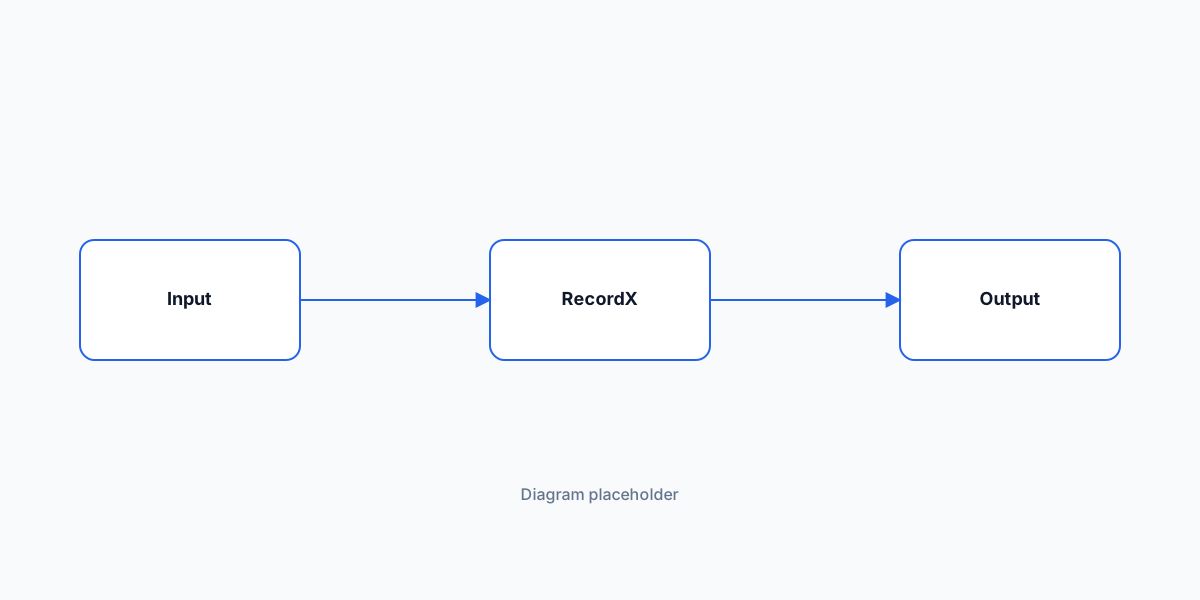
Same shape everywhere: bot-free browser capture, with mobile as the fallback when a client blocks tab audio.
- Google Meet: Chrome extension, tab audio, calendar auto-join once Google review completes for production.
- Zoom: Chrome extension for web client, bot fallback for desktop-only rooms.
- Teams: Chrome extension for web app, mobile fallback where tenant policy restricts extensions.
- Cross-platform bonus: phone calls and in-person meetings land in the same library, which neither native nor most third-party tools deliver.
Common failure modes and how to work around them
Every AI notes workflow runs into the same handful of failures. Naming them ahead of time saves you the debugging.
The meeting starts before the notetaker is ready
You join, the conversation starts, and you remember to hit record ten minutes in. Fix: use a notetaker that auto-joins from your calendar so the record button is not on your critical path. Google Calendar or Outlook integration handles most of this, and the notetaker starts as the host joins.
Tab audio permission not granted
Browser extensions need "share tab audio" the first time you use them. If you did not grant it, the transcript comes back silent. Fix: run a fifteen-second test call the first time you use the extension in a new browser. Sanity-check that audio flows.
A tenant policy blocks the bot
Especially on Teams. The bot tries to join, the tenant rejects it, you get a stub meeting with no audio. Fix: either get the vendor added to your tenant's allowlist, or switch to extension-side capture from the web client.
Cross-platform history splits
You take Monday's call on Zoom, Wednesday's on Meet, Friday's on Teams. Each platform's native AI stored the notes in its own silo. Six months later, you cannot find the March conversation because you cannot remember which platform hosted it. Fix: use one third-party notetaker for all three, and let native run in parallel if you like.
The recording exists but the summary was for the wrong meeting
Common with back-to-back meetings. The tool auto-joined the wrong URL, or the previous meeting spilled into the new one. Fix: give each meeting a distinctive calendar title so the transcript is easy to identify, and check the meeting title on the summary before you paste it anywhere.
Screenshots to expect on each platform
A quick tour of what the workflow looks like from the seat of a user.
How each platform's native AI is evolving
The native features are moving quickly. This is our read as of late 2026.
Zoom AI Companion is the most mature. Zoom made it free with the paid plan, which took the air out of some third-party pricing. Summary quality is close to the best third-party tools, and it works across Zoom Meetings, Zoom Phone, and Zoom Team Chat.
Gemini in Google Meet is catching up fast. The "Take notes for me" feature and Gemini's longer context window are landing new capabilities each quarter. It is a good default for Google Workspace shops.
Microsoft 365 Copilot is a broader product than just meeting notes, and the meeting side is one of many surfaces. It is powerful when the whole M365 stack is enabled, less useful when only Teams is licensed. The per-user license cost is meaningful.
The pattern: native AI is closing the gap on quality. The remaining moat for third-party tools is cross-platform history and the workflows outside video (phone calls, in-person, and AI assistant access to the history).
Migration paths between platforms
Teams that switch platforms hit the meeting-history problem hard. Here is what we see work.
Zoom to Meet
Export the last twelve months of Zoom cloud recordings, upload them to your third-party notetaker as historical uploads (if the tool supports it), keep the transcripts in the same library your new Meet calls land in. Six months later you can search across the boundary as if the switch never happened.
Meet to Teams
Google keeps native summaries inside the Meet product. If you switch to Teams, those summaries are stranded. The migration path is to export them as documents to Google Drive first, then ingest them into whichever notes tool now covers your Teams calls. Slow, but doable.
Teams to Zoom
Copilot's meeting notes live inside the M365 stack. Export via the meeting's OneNote or the Copilot summary page. Same shape as above: get them out first, then bring them into the new tool.
The lesson from all three migrations: if you know a platform switch might be coming in the next twelve months, run a third-party notetaker in parallel now. The parallel history is your migration insurance.
Team size and platform fit
Different team sizes tend to converge on different platforms in our experience.
- Solo and up to ten people: Google Meet dominates. The calendar integration is instant, the free tier is enough for most, and a third-party notetaker fills in the gaps.
- Ten to a hundred: mix of Meet and Zoom, sometimes Teams if the org is on Microsoft. This is where cross-platform history hurts the most, and where third-party notetakers earn their keep.
- A hundred plus: Teams dominates, driven by procurement and M365 licensing. Third-party notetakers exist here too, but they need IT approval and often a security review.
Pick your notetaker for the platform you use most, then check that it covers the other two competently for the days you cross over.
Verdict
If your team is 90% on one platform, native AI notes are the easiest choice and probably enough. Zoom AI Companion on Zoom, Gemini on Meet, Copilot on Teams.
If your week crosses two or three platforms, or you want your meeting history to survive a platform migration, a third-party notetaker earns its keep. RecordX covers all three, and picks up the phone calls and the in-person conversations that native tools cannot see.
The best notetaker is the one that gives you one history regardless of which room you were in.
Try RecordX across Meet, Zoom, and Teams. Free tier includes all three.
Try RecordX free